Blood and Fire
No, I'm not talking about GRRM. This is my review of A.M. Blackmere's A Procession of Ashes

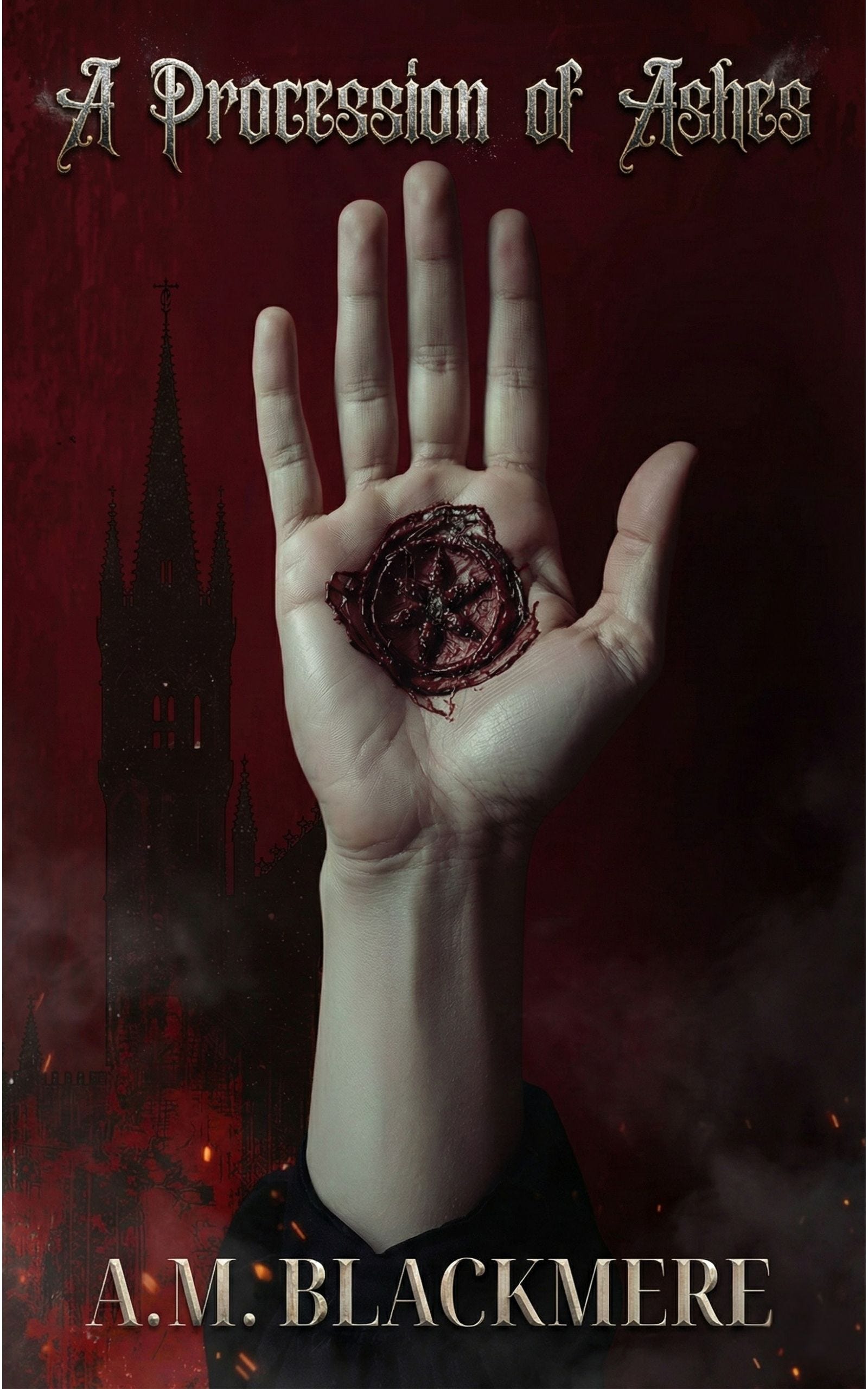
First, and appropriately enough, a confession. I found Between Two Fires to be a little repetitive towards the end. The little band of pilgrims encounter yet another otherworldly terror which is vanquished, often with suffering and sacrifice by one or other of the party. That’s not to say it’s not good, and I will read more by Buehlman but it wasn’t my favourite. I bring that up as it’s a comparison used by A.M. Blackmere | Author for A Procession of Ashes.
As a follow up to my first confession, here’s another. I loved this book.
A Procession of Ashes follows Fra. Matteo and Tommasso, respectively the priest and physician of the small town of Piacenza as they are confronted by Fra. Aureliano and his band of flagellating acolytes. The pages drip with atmosphere, at times they positively reek with it, in a good way. Blackmere recognises that one of our most potent senses is smell, even if it’s not the one we rely on the most. And so, the tang of dried blood, the stench of degraded flesh, the smells of a medieval town bombarded by the plague, they’re all brought to unsettling life here.
At the start of the novella, I was under the impression that the horrors here would be painfully human, rooted firmly in the depths that people will, and have descended to in the name of religion. While they absolutely are, there is something else waiting for us in this procession, something not of this world but that hungers for it.
Be warned: this is not for those of a delicate constitution. Flesh is torn, blood does not so much flow as fountain off the pages at times. But there is a humanity here, as there is in all the best horror. Blackmere realises that to truly be drawn in and scared the reader must see something of themselves or of their society in the story, and he provides this. Fra. Aureliano and his ever-growing band offer pain, suffering and a mysterious psalm as the only route out from the horrors of the plague that has befallen Piacenza, and it’s a very human reaction to look for a life raft when things are bleak. Faith can often provide that in a healthy, supportive and loving way, but it can also be exploited by the ruthless and by zealots. And so it is here.
I will not spoil any more of the plot or specifics than I already have, so I shall leave this review by saying I really liked how A.M. Blackmere wraps up the story, the manner in which he subverts the book’s themes to provide a solid and satisfying conclusion, albeit one that is not without further hardship for his cast. But then, that’s what we do to our characters, isn’t it?
5 out of 5 for me.